LESSON 1
The Body Wisdom Basics
Basic Terms
SOMATIC ATTUNEMENT: Somatic attunement means self-listening, akin to listening to sound, but it involves “listening” with all or your senses. It’s the sense of self-awareness one derives from perceiving within instead of the world outside our bodies.
CORE: The vertical integrity or tone of the central structures of the body. Contrast awareness of core muscles (psoas, diaphragm) with peripheral structures such as pectoralis, quadriceps, deltoids, etc. The term is popular in many fitness regimens including Pilates, Alexander, and Feldenkrais trainings, as well as in Aikido.
HARA: The body’s center of gravity, roughly just below the navel midway back. It’s at the center of the core.
HEAD HEART HARA
Body-wisdom basics are three-fold
HEAD: Notice where your thoughts reside. Feel the weight of your head. Everything has weight, including your thoughts, especially the heavy ones, the interpretations and judgments. Feeling weight is the key to grounding and centering, which is what we will explore together later.
HEART: At another time, or now if you are eager, notice the weight of your torso. On an inhale, feel your spine lengthen, lifting the weight of your arms and shoulders from underneath. Focus on feeling the center of your torso. Let your “heart center” move from side to side, then forward and back, equalizing the distances, then reducing them around the core.
Notice how your body can move from your torso, our place of emotional intelligence. Notice from this place whether your thoughts are still accessible, and how the center of gravity of your head responds. Cultivate the awareness of the center of gravity of your torso, your emotional center.
HARA: At another time, or now if you are eager, place your hands on your belly, thumbs over your navel. Focus your breath and attention into your hara, at your body’s center of gravity. Move your body from this place, forward and back, right and left. Imagine its connection with the core of the planet. Notice your thoughts from this place, and how these movements affect the movement of your torso and head. Cultivate the awareness of your center of gravity in your belly, the seat of your intuitive wisdom.
Embodied Practice: Centering
Part 1
• Pick a time for practicing the body-wisdom basics: head, heart & hara. When you start, identify whether what you think or feel comes from your head, from your heart (emotional center,) or from your belly. In making this determination, consider whether it’s about a concept or a feeling/emotion, and whether the tone of voice is revealing of meaning.
• Continue following your thoughts or actions until the end of your practice time, identifying their source. Drop your attention into your heart and settle there. How does this affect your thinking? How is your thinking affected by dropping your attention further and allowing it to center in your belly?
Part 2
• Repeat this practice when you hear from someone else, or observe something they do. Consider whether their words or actions come from the head, heart, or hara, and whether it is received by you in your head, heart or hara. These need not correlate, and there are no wrong answers. This is about the practice of making distinctions.
Part 3
• What does this practice do for you when you are not practicing? Does it increase your options for replying to others or acting wisely in situations?
Part 4
• Is your field of awareness in front of you greater than behind you? If so, notice feelings in your back and expand these feelings to the space behind you. Turn slightly and glance behind you, retaining the awareness after facing forward again. Practice equalizing the fields. Or lying face up, but feeling your body weight on your back, then the surface you are lying on, then the ground, perhaps the core of the planet. Equalize the fields of awareness.
Taking this feeling of ground into standing, notice your awareness of what’s above you, and what’s beneath where you stand. Expand your awareness beneath in a similar manner. Feel gravity attracting your weight through your feet and project your attention through the floor, perhaps also the foundation down into the Earth, indeed even to its core. Equalize fields of awareness above and below. Do the same with your awareness of fields to the right and left.
EXAMINE PERIODICALLY
How far down can you sense at the moment, right now?
Where in your body is the center of your awareness?
When you stand, feel for the pattern of weight distribution in your feet?

Karlfried Graf Dürckheimr
The classic text on balance, inner calm, and the cultivation of tranquillity
• Reveals the psychosomatic underpinnings of Zen, Taoism, and other Eastern traditions
• Shows how the theory and practice of Hara helps us find our essential self
In Hara, Karlfried Graf Dürckheim shows the Western world how to overcome the physical and spiritual decay of modern life by adopting the age-old techniques of Japanese Zen masters. By leaving behind the “chest out–belly in” posture and attitude of the West and adopting the belly-centered posture and attitude of Hara, individuals can live a calm, grounded, and more balanced life.
Dr. Stephen Sinatra
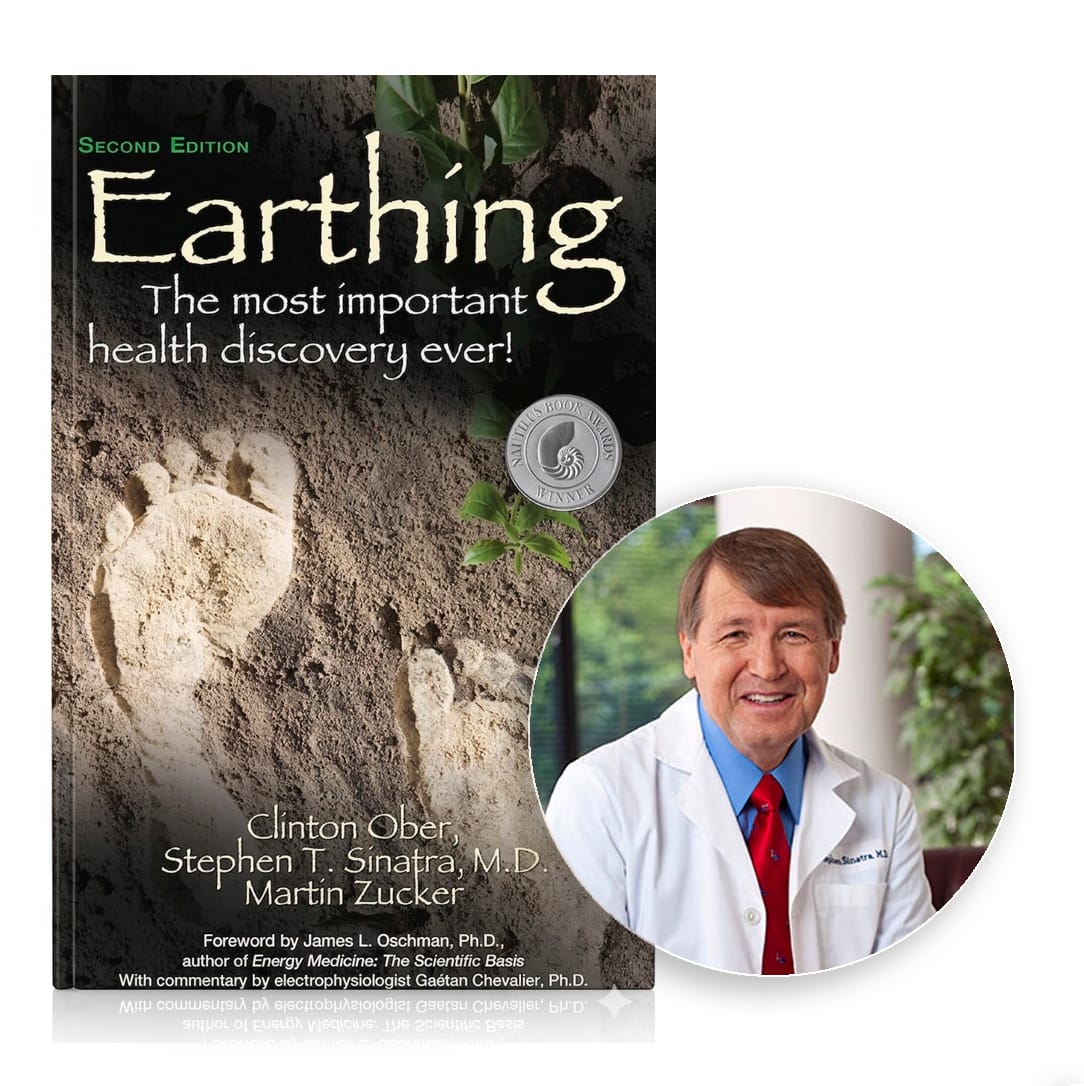
Dr. Stephen Sinatra, a prominent cardiologist, promotes grounding or “earthing” as the solution for chronic inflammation. He says disconnection with Earth’s energy field is the cause of most common modern diseases. Grounding also reduces blood viscosity, supports heart rate variability and promotes homeostasis.
Dr. Stephen Sinatra is the co-author of the book : "Earthing: The Most Important Health Discovery Ever?"
See him in an interview with Dr. Mercola below:
COMING UP NEXT IN THE COURSE
Lesson 2: You will reinforce your sense of center by balancing your awareness of what is before you, behind you, above and below you, and to either side.
Lesson 3: You will identify your pre-dispositions for responding to pressure. You will learn this from your own body. Then you will consider what words are experienced as pressure in your mind. Through personal “pressure statements,” you will connect the embodied feelings with the verbal process, and set priorities for learning according to your own predispositions.
Lessons 4-7: You will learn simple movement practices that develop sequentially your sense of ground, center and extension from core.
Lesson 8: Teaches your mind to put language to your body-wisdom. I call it reverse body language, the ability to speak the attitude of comfort under pressure.
Lesson 9: The final lessons explore applications to daily activities, and build dance-like fun and games upon the movement practices we have learned.
Stay in touch with the planet, like the actions of water and the cycles of the moon.